Choosing the Right Design: A Practical Guide to the Best Dad Ever Faux Yarn T-shirt PNG
When planning a personalized gift for Father's Day, a birthday, or a family reunion, the difference between a homemade craft and a professional-looking product often lies in the quality of the digital asset used. The Best Dad Ever Faux Yarn T-shirt PNG has emerged as a popular choice among DIY enthusiasts and small business owners alike. This specific design style mimics the texture and dimensionality of knitted yarn while remaining a flat, high-resolution digital file. Understanding what makes this format distinct, how it compares to other sublimation options, and where it fits best in your creative workflow is essential for making an informed decision before you start printing.
Understanding the Faux Yarn Aesthetic and Digital Format
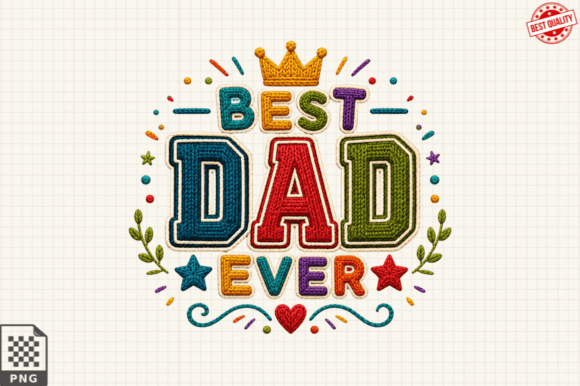
The term "faux yarn" refers to a graphic design technique that simulates the look of chunky knitwear or embroidery using digital shading, highlights, and texture maps. Unlike a standard vector illustration with flat colors, a Best Dad Ever Faux Yarn T-shirt PNG utilizes complex layering within the image itself to create the illusion of depth. When printed, especially via sublimation, these designs can trick the eye into thinking the text or graphic was physically stitched or knitted onto the fabric.
The file format itself—PNG with a transparent background—is a critical component of its utility. PNG (Portable Network Graphics) supports lossless compression and, more importantly for crafters, alpha channel transparency. This means the design does not come with a white or colored box around it; it can be placed directly onto a colored t-shirt mockup or a dark hoodie without needing manual removal of the background. For users working with software like Photoshop, Illustrator, Cricut Design Space, or Silhouette Studio, this saves significant time and ensures cleaner edges compared to JPEG files, which always include a solid background.
Comparing Sublimation PNGs to Other Design Methods
Evaluating whether this specific digital download is the right tool requires comparing it against alternative methods of creating apparel graphics. The primary alternatives usually fall into three categories: standard vector SVGs, heat transfer vinyl (HTV) layers, and print-on-demand services.
Sublimation PNG vs. Vector SVGs: Vector files (SVG, EPS, AI) are mathematically defined lines that can be scaled infinitely without losing quality. They are ideal for cutting machines. However, vectors struggle to replicate complex textures like faux yarn unless they contain thousands of anchor points, which can slow down software. A pre-rendered Best Dad Ever Faux Yarn T-shirt PNG offers immediate texture detail that would take hours to recreate manually in vector format. If your goal is visual realism rather than cuttable outlines, the PNG is superior.
Sublimation PNG vs. Multi-Layer HTV: To achieve a similar textured look with Heat Transfer Vinyl, a crafter would need to layer multiple colors of vinyl precisely—a process known as "weeding" and alignment. This is time-consuming and prone to error. The sublimation PNG achieves the multi-color, shaded look in a single press. The trade-off, however, is the substrate. Sublimation only works effectively on polyester-coated items or light-colored synthetic fabrics, whereas HTV can be applied to cotton and dark fabrics. If your project requires a 100% cotton tee in navy blue, the faux yarn PNG intended for sublimation may not be the correct choice unless you use a specific sublimation transfer paper workaround, which alters the hand-feel of the shirt.
Ideal Use Cases and Project Compatibility
The versatility of this digital design extends beyond just t-shirts. Because the file is high-resolution and includes a transparent background, it adapts well to various surfaces compatible with sublimation printing. Common applications include:
- Apparel: Polyester blends, performance wear, and light-colored hoodies where the "knitted" look adds a cozy, winter-themed aesthetic even in warmer months.
- Drinkware: Coated tumblers, mugs, and water bottles. The curvature of these items often benefits from the seamless nature of a PNG, as there are no vinyl seams to peel over time.
- Paper Crafts: Greeting cards, scrapbooking pages, and party invitations. The high DPI (dots per inch) ensures the faux yarn texture remains crisp when printed on cardstock.
- Home Decor: Pillows, coasters, and tote bags made from sublimation-friendly blanks.
For small business owners, the instant digital download model allows for rapid prototyping. You can test how the design looks on different mockups before committing to inventory. The transparent background feature is particularly valuable here, allowing designers to place the "Best Dad Ever" text over patterned backgrounds or photographic elements without unsightly white borders.
Limitations and Decision Factors
While the Best Dad Ever Faux Yarn T-shirt PNG offers significant advantages, it is not a universal solution for every crafting scenario. Prospective buyers must consider specific limitations to avoid frustration.
Fabric Composition Constraints: As noted earlier, true sublimation requires a polymer base. If you attempt to sublimate this design onto a 100% cotton shirt, the ink will wash out after the first laundry cycle. For cotton projects, you would need to use a sublimation transfer sheet (which leaves a plastic-like layer on the fabric) or switch to an HTV approach. Users must evaluate their blank inventory before purchasing.
Scalability Issues: Unlike vectors, raster images (PNGs) have a fixed maximum resolution. While most commercial downloads are provided at 300 DPI and large dimensions (e.g., 4000x4000 pixels), enlarging them beyond their native size for billboard-sized prints will result in pixelation. For standard apparel and mug sizes, this is rarely an issue, but it is a factor for large-format home decor.
Editing Limitations: Once downloaded, the text "Best Dad Ever" is part of the image pixels. You cannot easily change the font, spacing, or wording without advanced photo editing skills and potentially ruining the yarn texture effect. If you need to customize the name (e.g., "Best Grandpa Ever"), a layered PSD file or an SVG might be a better investment, though those often lack the pre-rendered texture quality of the PNG.
Making the Final Choice
Selecting the right digital asset comes down to balancing aesthetic goals with technical constraints. The Best Dad Ever Faux Yarn T-shirt PNG is an excellent choice if you prioritize speed, visual texture, and ease of use for sublimation projects. It eliminates the need for complex layering in design software and removes the tedious weeding process associated with vinyl.
However, if your primary medium is 100% cotton, if you require extensive text customization, or if you need to scale the image to massive proportions, alternative formats like SVGs or multi-layer HTV designs may serve you better. By understanding the specific strengths of the faux yarn aesthetic and the technical requirements of sublimation, you can ensure your final product looks professional and stands up to repeated use. Always verify the resolution and license terms of the digital download to ensure it meets both your personal creative standards and any commercial intentions you may have.